
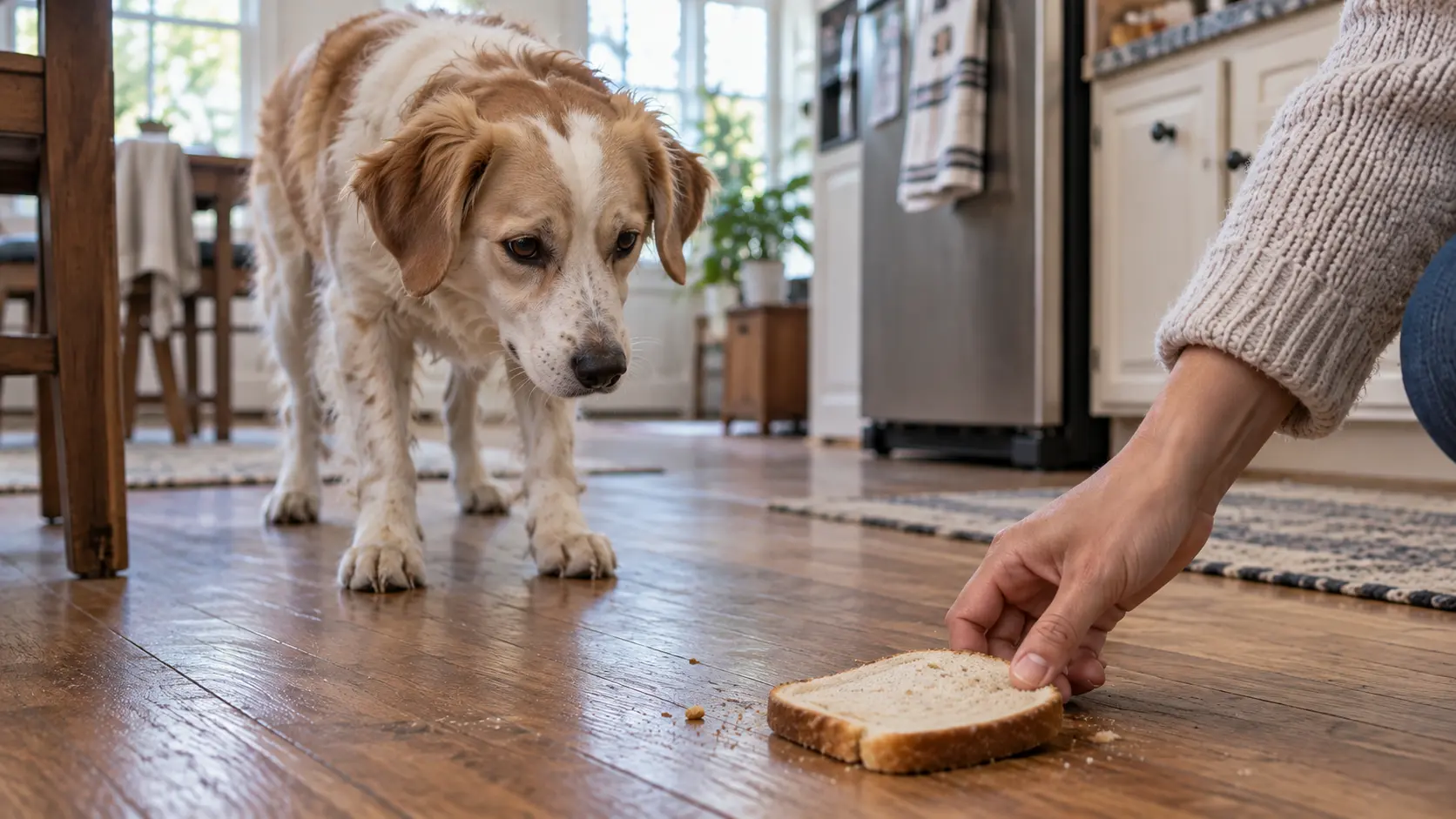
Most healthy dogs can eat a small amount of plain, fully baked bread occasionally. Bread is not nutritionally necessary, though, and what is in the loaf matters more than whether it is white, wheat, or whole grain.
Raisin bread, products containing xylitol, chocolate, macadamia nuts, or significant amounts of onion or garlic need different treatment. Raw yeast dough is more serious: it can expand and produce alcohol after a dog swallows it.
This guide explains which breads are generally okay, how much to offer, what ingredients to check, and what to do if your dog has already helped itself to the loaf.
Can dogs eat bread? Yes, most healthy dogs can have a small piece of plain, fully baked bread as an occasional treat. Check the ingredient list first. Some breads contain ingredients that are harmful to dogs, and raw yeast dough is a separate hazard that requires prompt veterinary advice.
Is Bread Good or Bad for Dogs?
Plain baked bread falls somewhere between “safe enough as an occasional extra” and “not particularly useful.”
Bread contains calories and nutrients, so saying it has no nutritional value at all would be inaccurate. But a dog eating a complete and balanced diet should already be getting the nutrients it needs from its regular food. Bread does not need to fill a nutritional gap.
The bigger concern with routinely sharing bread is simply that extras add calories. Bread, training treats, dental chews, table scraps, and other snacks all count toward the same daily intake.
So bread is not automatically “bad” for a healthy dog, but it is not something dogs need to eat regularly either.
The advice may also change for dogs on therapeutic or weight-management diets, those undergoing a food-allergy trial, or dogs with conditions such as diabetes. If you are unsure about other table foods, see LumaPaw’s guide to which human foods are safe for dogs.
What Types of Bread Can Dogs Eat?
For ordinary bread, safety depends more on whether it is fully baked and what ingredients it contains than on the color of the loaf.
White Bread
A small amount of plain, fully baked white bread is generally low risk for a healthy dog.
That does not make it a particularly useful treat. White bread still adds calories, and toppings or fillings can completely change the situation.
A small piece of plain sandwich bread, for example, is very different from garlic toast or raisin bread.
Wheat and Whole-Grain Bread
Most dogs can also tolerate a small amount of plain wheat or whole-grain bread.
Whole-grain bread is often promoted as a healthier choice for people, but that does not mean it provides an important health benefit when used as a dog treat. Your dog’s main diet should already be supplying appropriate nutrients.
Wheat also is not automatically a problem for dogs. Some dogs can develop food allergies involving wheat, but that does not mean grain allergies are common or that every itchy dog needs a grain-free diet.
If your dog has a diagnosed wheat allergy or is currently completing a veterinarian-directed elimination diet, bread containing wheat may need to be excluded completely.
Toast and Bread Crust
Plain toast is generally treated much like the bread it came from. Toasting a safe slice does not make it meaningfully better for a dog.
What you put on it matters.
Plain toast is different from toast covered with garlic butter, chocolate spread, sugary toppings, or other ingredients that may be unsuitable.
Bread crust is also simply another part of the loaf. A small plain piece from otherwise safe bread can be treated similarly to the softer part.
What About Sourdough, Rye, Brioche, and Other Breads?
With breads such as baked sourdough, rye, brioche, potato bread, and specialty loaves, check the entire recipe rather than relying on the bread’s name.
Ask four questions:
- Is it fully baked?
- Does it contain any unsafe ingredients?
- How much is the dog getting?
- Does the dog have any dietary restrictions?
Brioche and other rich breads may contain more butter, sugar, or other extras, so there is little reason to choose them as dog treats.
Fully baked sourdough should also not be confused with raw sourdough dough or active starter. Raw fermenting dough presents a very different risk.
Bread Ingredients Dogs Should Avoid
A bread label can matter more than the type of flour used.
Before sharing a specialty loaf, check the ingredients for known hazards.
Raisins or Grapes
Raisin bread should not be treated like ordinary bread.
Grapes and raisins can cause acute kidney injury in dogs, and individual susceptibility varies. Because that variation makes a reliable “safe number” difficult to establish, it is not a good idea to calculate at home how many raisins your dog can tolerate.
If your dog has eaten raisin bread, contact your veterinarian or an animal poison service for advice based on the dog’s size and estimated exposure.
Xylitol
Xylitol is a sweetener that can cause a rapid, dangerous drop in blood sugar in dogs and may cause serious liver injury at higher exposures.
It can appear in some sugar-free or specialty baked goods, although it is not an ingredient in every loaf of bread.
Check the ingredient list carefully, especially on products marketed as sugar-free or reduced-sugar. Xylitol may also be labeled as birch sugar or wood sugar.
If a dog eats a product containing xylitol, seek veterinary advice promptly rather than waiting for symptoms.
Chocolate, Macadamia Nuts, Garlic, and Onion
Chocolate-containing breads and pastries can be harmful, but risk depends on the type and amount of chocolate and the dog’s size.
Macadamia nuts are specifically toxic to dogs. That does not mean every nut or seed belongs in the same category, so broad claims that “all nuts” or “all seeds” are poisonous are misleading.
Garlic and onion can damage canine red blood cells when enough is consumed. Risk depends on the amount and form, and concentrated onion or garlic powders can be particularly relevant.
Rather than trying to decide based only on the bread’s name, keep the packaging and ingredient label available if you need to call your veterinarian.
Why Raw Bread Dough Is Dangerous for Dogs
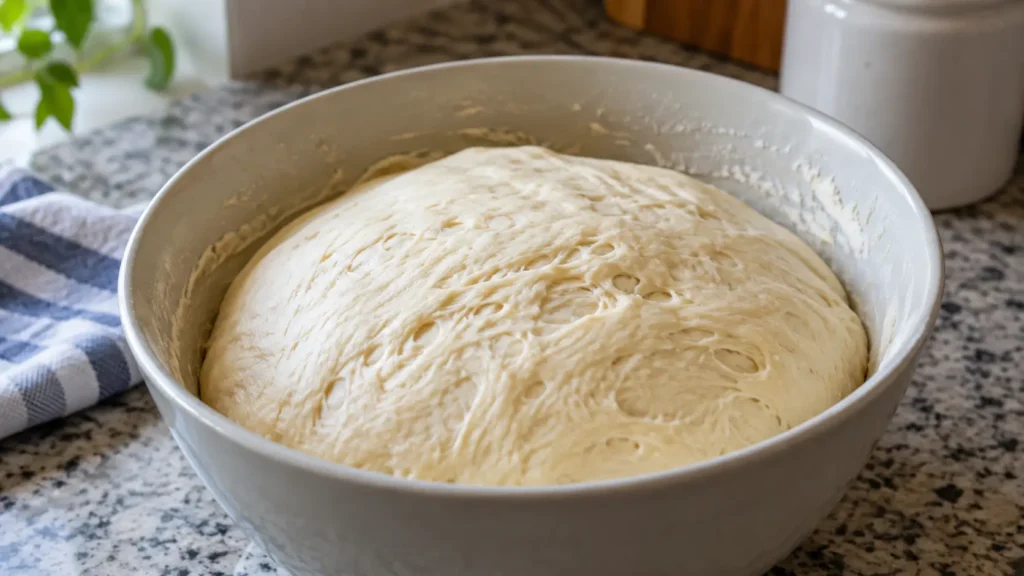
Raw yeast-containing dough is much more concerning than a piece of baked bread.
Inside a dog’s warm stomach, active yeast can continue fermenting. Two problems can occur at the same time.
First, the dough can expand and contribute to painful stomach distention.
Second, fermentation produces ethanol, which can be absorbed into the bloodstream and cause signs similar to alcohol intoxication.
Possible warning signs include:
- a swollen or painful abdomen
- repeated or unproductive retching
- unusual sleepiness or weakness
- stumbling or poor coordination
- disorientation
- tremors or seizures
Active sourdough starter can create a similar concern because it contains actively fermenting yeast and microorganisms.
Fully baked bread does not pose the same fermentation-and-expansion risk as raw active yeast dough.
If your dog has swallowed raw yeast dough or active starter, contact a veterinarian, emergency veterinary clinic, or animal poison service promptly. Do not wait for symptoms to appear, and do not try to induce vomiting unless a veterinary professional specifically instructs you to do so.
How Much Bread Can a Dog Eat?
There is no evidence-based chart that says a dog of a particular weight can safely have a certain number of slices.
Bread recipes differ. So do slice sizes, calorie content, and individual dogs’ energy requirements.
A more useful rule is to consider bread part of your dog’s overall treat allowance. Veterinary nutrition guidance generally recommends keeping treats and other extras below about 10% of a healthy dog’s daily calories, with most nutrition coming from a complete and balanced diet.
That 10% includes everything outside the main diet—not just bread.
For example, if your dog has already had several training treats and a dental chew, a piece of bread does not become an additional free allowance.
For an occasional taste, think small bite rather than routine slice.
Dogs that need calorie restriction or a carefully controlled therapeutic diet may need stricter limits set with their veterinarian.
My Dog Ate Bread—What Should I Do?
A stolen piece of plain sandwich bread is usually a very different situation from raw dough or a loaf containing raisins.
Instead of assuming the worst—or assuming everything is fine—check a few things first.
1. Identify What Your Dog Ate
Determine whether it was:
- ordinary fully baked bread
- toast
- raw yeast dough
- active sourdough starter
- a pastry
- a flavored or specialty loaf
Raw dough needs a different response from baked bread.
2. Read the Ingredient List
Look specifically for ingredients such as:
- raisins or grapes
- xylitol
- chocolate or cocoa
- macadamia nuts
- onion
- garlic
Keep the packaging nearby in case you need to speak with a veterinarian.
3. Estimate How Much Was Eaten
Try to work out:
- the approximate amount
- when your dog ate it
- your dog's approximate weight
One bite of plain baked bread and an entire specialty loaf are not equivalent exposures.
4. Check for Missing Packaging
If the loaf was stolen from a counter or pantry, check whether the plastic bag, wrapper, clip, or other packaging was swallowed too.
A swallowed wrapper creates a separate foreign-body concern and may cause an intestinal obstruction.
5. Watch for Concerning Signs
Contact veterinary help if your dog develops signs such as:
- repeated vomiting or retching
- obvious abdominal swelling
- severe lethargy
- weakness
- stumbling or loss of coordination
- tremors
- seizures
- collapse
6. Know When Not to Wait
Contact veterinary help promptly if the dog ate:
- raw yeast dough
- active sourdough starter
- bread containing a known toxic ingredient
- moldy bread followed by concerning signs
- packaging or another non-food object
A dog eating a large amount of fully baked bread is not the same as a dog eating raw dough. Baked bread does not continue rising in the stomach through active yeast fermentation in the same way raw dough can.
Still, a large food intake can cause significant digestive upset, and a very large or uncertain ingestion is worth discussing with your veterinarian, especially if symptoms develop.
Can Puppies Eat Bread?
A small amount of plain, fully baked bread is not uniquely toxic to puppies.
The reason to be more conservative is nutrition. Puppies are growing and have specific requirements for energy, protein, minerals, and other nutrients. Those needs should be met primarily through a complete and balanced puppy food.
Bread can add calories without offering anything a properly formulated puppy diet needs.
If you do share a taste, keep it very small and make sure the piece is appropriately sized for the puppy. Large or tough pieces can be harder for a small puppy to handle safely.
Bread should remain an occasional extra, not a regular part of a puppy’s meals.
Can Bread Help a Dog's Upset Stomach?
Bread is sometimes suggested as a home remedy for digestive upset, but it is not an established treatment for vomiting or diarrhea in dogs.
The right feeding approach depends on why the dog is unwell, how severe the signs are, how long they have lasted, and whether there are other symptoms.
Veterinarians may recommend a particular gastrointestinal diet or short-term feeding plan depending on the situation. Homemade “bland diets” also should not automatically be assumed to be the best option for every dog.
If you are specifically considering rice, LumaPaw’s guide explains whether rice helps dogs with diarrhea and why it should not be treated as a cure.
Persistent vomiting, diarrhea, blood, marked lethargy, pain, or other concerning signs warrant veterinary advice.
Dogs That May Need to Avoid Bread
Some dogs need more individualized advice than “a small piece is fine.”
That includes dogs:
- with a confirmed wheat or other food allergy
- undergoing a food-allergy elimination trial
- on a veterinary therapeutic diet
- with diabetes
- on a weight-management plan
- with other conditions requiring tightly controlled feeding
Wheat can be a canine food allergen, but symptoms such as itching, ear problems, vomiting, or diarrhea do not prove wheat is responsible.
Reliable food-allergy diagnosis generally requires a controlled elimination diet followed by a carefully managed food challenge under veterinary guidance.
If your dog is undergoing such a trial, even a small piece of bread may interfere with the process if it contains ingredients being excluded.
Bread also does not cause diabetes simply because it contains carbohydrates. The more practical concern for a diabetic dog is that unplanned snacks can interfere with an individualized feeding and treatment plan.
What About Moldy Bread?
Do not feed moldy bread to a dog.
Some molds growing on food can produce tremorgenic mycotoxins, substances capable of causing gastrointestinal and neurological problems.
Possible signs can include vomiting, abnormal coordination, tremors, increased body temperature, and seizures.
Not every moldy loaf contains the same organism or produces the same toxins, so mold exposure does not guarantee poisoning. But there is no practical benefit to taking the risk.
If your dog eats moldy food and develops tremors, seizures, severe vomiting, poor coordination, or other concerning signs, seek veterinary care promptly.
Frequently Asked Questions
Can Dogs Eat Bread Every Day?
Bread is better treated as an occasional extra than a daily food.
A dog eating a complete and balanced diet does not need bread for nutrition, and daily pieces can add more calories than owners realize. If you do occasionally share bread, count it as part of the dog’s total treat allowance.
Can Dogs Eat Bread Crust?
Yes, plain crust from otherwise safe, fully baked bread is generally treated the same way as the rest of the loaf.
The important questions are still the ingredients, amount, and individual dog’s health. A plain crust is very different from one coated with garlic butter or other unsuitable toppings.
Can Dogs Eat Sourdough Bread?
A small amount of plain, fully baked sourdough may be tolerated by many healthy dogs if it contains no unsafe ingredients.
Raw sourdough dough or active starter is different. Because it is actively fermenting, it can expand and produce ethanol after ingestion and requires prompt veterinary advice.
What If My Dog Ate a Whole Loaf of Bread?
First check whether the bread was fully baked and review its ingredients. Then estimate how much your dog ate, consider the dog’s size, watch for symptoms, and make sure the packaging was not swallowed.
A whole plain baked loaf does not create the same fermentation hazard as raw dough, but the amount may still cause significant digestive upset. Contact your veterinarian if the amount was large, ingredients are uncertain, packaging is missing, or your dog develops concerning signs.
Can Dogs Eat Seeded Bread?
“Seeded bread” is too broad a category for a simple yes or no.
Not every seed is toxic to dogs, so it is inaccurate to reject all seeded bread on that basis alone. Check the specific seeds and the rest of the ingredient list. Specialty loaves may also contain raisins, nuts, sweeteners, onion, garlic, or other additions that matter more than the presence of seeds itself.
Can Dogs Eat Bread? The Bottom Line
Most healthy dogs can eat a small amount of plain, fully baked bread occasionally, but bread is an optional treat rather than something they need nutritionally.
Check the ingredient list before sharing specialty breads, and remember that raw yeast dough is completely different from a baked slice. If your dog steals bread, identify exactly what was eaten, how much, whether any packaging is missing, and whether potentially harmful ingredients are present.
For raw dough, known toxic ingredients, swallowed packaging, or concerning symptoms, contact a veterinarian rather than trying to manage the exposure at home.