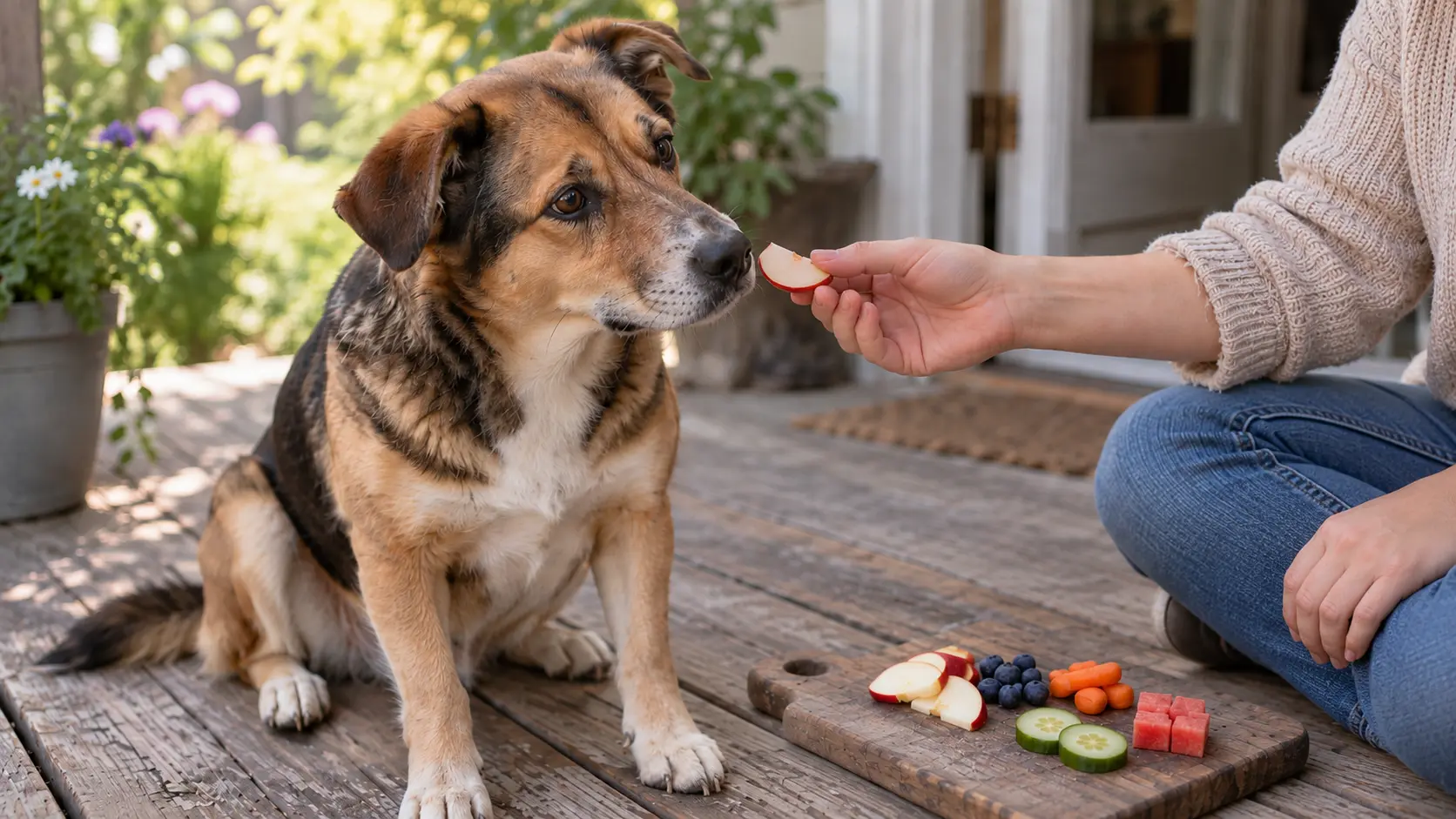
Dogs can eat many common fruits, including properly prepared apples, blueberries, bananas, strawberries, watermelon, cantaloupe and pears. Many vegetables can work as occasional treats too, but the answer is not simply “fruit and vegetables are healthy, so they are safe.”
The part of the food matters. Apple flesh and a corn kernel are very different from an apple core or corn cob. Grapes and raisins can cause serious poisoning, while onions, garlic and related vegetables can damage red blood cells.
For most healthy dogs, suitable produce should stay a small part of the diet. This guide shows what is generally safe, what needs preparation, what is better avoided and which exposures call for veterinary help.
What Fruits Can Dogs Eat? The Quick Answer
Many dogs can have small amounts of plain:
- Apples
- Bananas
- Blueberries
- Strawberries
- Raspberries
- Watermelon
- Cantaloupe
- Pears
- Pineapple
- Peach flesh with the pit removed
There is no single fruit that every dog needs or one that deserves to be called the “healthiest.” A dog eating an appropriate complete and balanced diet does not need fruit added to make the diet nutritionally complete.
Preparation also changes the answer. Remove pits, cores, hard seeds and tough rinds where appropriate, and cut food into pieces that suit your dog’s size and eating style.
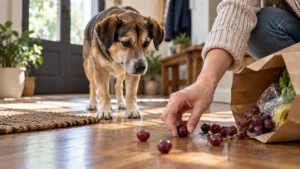
Grapes and raisins are major exceptions. They can cause acute kidney injury in dogs, and there is no reliable number that can be considered safe. If your dog eats grapes or raisins, contact a veterinarian or veterinary poison service promptly rather than waiting to see whether symptoms develop.
Health conditions can also change otherwise routine feeding advice. Dogs with diabetes, pancreatitis, food sensitivities or prescription diets may need individualized guidance before new treats are added.
Fruits and Vegetables Dogs Can Eat: Quick-Reference Chart
“Safe” is more useful when it explains which part of the food is safe and what preparation is needed.
Food |
Status |
Edible part / preparation |
Main thing to know |
|---|---|---|---|
Apple |
Safe with preparation |
Flesh; remove core and seeds |
Cut into manageable pieces |
Banana |
Generally safe |
Plain flesh |
Keep portions modest |
Blueberries |
Generally safe |
Plain |
Use as an occasional extra |
Strawberries |
Generally safe |
Plain |
Avoid heavily sweetened products |
Raspberries |
Generally safe |
Plain |
Processed products require an ingredient check |
Watermelon |
Safe with preparation |
Flesh |
Remove hard rind |
Cantaloupe |
Safe with preparation |
Flesh |
Remove rind |
Pear |
Safe with preparation |
Flesh |
Remove core and seeds |
Peach |
Safe with preparation |
Flesh |
Remove pit completely |
Orange |
Safe with caution |
Peeled flesh |
Peel and seeds should be removed |
Carrot |
Generally safe |
Raw or cooked, plain |
Cut hard pieces appropriately |
Green beans |
Generally safe |
Plain |
Avoid seasoned dishes and casseroles |
Cucumber |
Generally safe |
Plain |
Cut to a suitable size |
Broccoli |
Generally safe in modest amounts |
Plain |
Raw or cooked can be offered |
Zucchini |
Generally safe |
Plain |
Raw or cooked |
Pumpkin |
Generally safe |
Plain pumpkin |
Not pumpkin pie filling |
Sweet potato |
Safe with preparation |
Cooked and plain |
Not fries or seasoned casserole |
Corn |
Safe part only |
Plain kernels |
Do not feed the cob |
Tomato |
Use caution |
Ripe flesh |
Green fruit and plant material are different |
Avocado |
Better avoided |
— |
Pit and high-fat flesh create avoidable concerns |
Cherries |
Better avoided |
— |
Pits, stems and leaves create unnecessary risk |
Grapes and raisins |
Toxic / potentially urgent |
None |
Can cause acute kidney injury |
Onion, garlic, chives, leeks |
Toxic |
None |
Can damage red blood cells |
Wild mushrooms |
Treat as potentially toxic |
None |
Identification can be unreliable |
Rhubarb |
Avoid |
None |
Toxic plant portions are present |
Safe Fruits Dogs Can Eat
Apples
Plain apple flesh can be an occasional dog treat. Wash the fruit, remove the core and seeds, and cut the flesh into pieces your dog can handle comfortably.
Apple seeds contain cyanogenic compounds, which is why deliberately removing them makes sense. That does not mean accidentally swallowing one or two seeds automatically causes poisoning, so there is no need to turn a sensible preparation precaution into an alarmist claim.
Blueberries and Other Berries
Blueberries, strawberries and raspberries can all fit into a healthy dog’s treat allowance when served plain.
Berries contain fiber and various naturally occurring plant compounds, but that does not prove that feeding a few berries will prevent disease or “boost” a dog’s immune system. Their main role here is much simpler: they are another small food that some dogs enjoy.
Processed berry products need a separate ingredient check. Sugar-free products, in particular, should be checked for xylitol, which is toxic to dogs.
Bananas
Dogs can eat plain banana flesh in small portions.
Bananas are easy to cut into small pieces, but there is no nutritional reason to give large servings. Like other treats, banana calories count toward the dog’s total daily intake.
Skip banana desserts, sweetened banana products and recipes containing ingredients you have not checked for dog safety.
Watermelon and Cantaloupe
Watermelon and cantaloupe flesh can be offered in small pieces after the rind is removed.
The hard rind is not the same as the edible flesh and can create digestive or obstruction problems if a dog swallows a large piece.
For more detail on rind, seeds, portions, and preparation, see our cantaloupe safety guide.
Pears, Peaches and Other Pitted Fruits
Pear flesh can be offered after removing the core and seeds.
Peach flesh can also be edible, but the pit needs to be removed completely. The same general caution applies to other stone fruits such as plums and apricots: the flesh and the pit are different safety questions.
Stone-fruit pits contain cyanogenic compounds and can also act as foreign bodies if swallowed. In practice, physical obstruction may be as important a concern as toxicity.
Oranges and Other Citrus
Small amounts of peeled orange flesh may be tolerated by many dogs.
Remove the peel and seeds, and do not assume citrus plant material or concentrated citrus oils are equivalent to the fruit flesh. Some dogs may also develop stomach upset after citrus.
There is no need to make oranges a regular part of a dog’s diet if your dog does not tolerate them well.
Pineapple and Other Plain Fruits
Small amounts of plain fresh pineapple flesh can be another occasional option.
The important word is plain. Pineapple packed in syrup, fruit desserts and sweetened canned products are different foods from fresh fruit and may contain unnecessary sugar or other ingredients.
That same principle applies throughout this guide: knowing that the original fruit is dog-safe does not automatically make every product made from it suitable.
What Vegetables Can Dogs Eat?
Many vegetables can also work as occasional treats. Serve them plain rather than assuming a vegetable dish prepared for people is automatically dog-safe.
Carrots
Carrots can be served raw or cooked.
For raw carrots, cut hard pieces into a size appropriate for your dog rather than offering a chunk that could be difficult to chew safely. Cooked carrots should be plain.
Carrots should not be presented as a substitute for proper dental care. Being crunchy does not make them a treatment for dental disease.
Green Beans, Cucumber and Zucchini
Plain green beans, cucumber and zucchini are simple vegetable options for many healthy dogs.
Depending on the food, they may be served fresh, cooked or sometimes frozen. Avoid butter, sauces and seasoning blends.
A green bean on its own is a very different food from green-bean casserole made with onions, cream, salt and other ingredients.
Broccoli and Cauliflower
Dogs can eat small amounts of plain broccoli and cauliflower.
They may be served raw or cooked, provided the pieces are manageable and no unsafe seasoning has been added. There is no need to turn their vitamin or plant-compound content into exaggerated health claims.
For more detail on stems, florets, preparation, and portions, see our broccoli safety guide.
Pumpkin, Squash and Sweet Potato
Plain pumpkin, squash and properly cooked sweet potato can be used as occasional extras.
That does not mean every food containing them is equivalent.
Plain cooked sweet potato is different from:
- Sweet-potato fries
- A buttery casserole
- Food seasoned with garlic or onion
- A heavily sweetened dish
The same distinction applies to pumpkin. Plain pumpkin and pumpkin pie filling are not interchangeable.
Pumpkin also should not be presented as a universal cure for diarrhea or constipation. Ongoing digestive symptoms can have many causes and deserve appropriate veterinary assessment.
Corn
Plain corn kernels and a corn cob are two completely different safety questions.
Dogs can digest corn kernels, but corn cobs are dangerous foreign objects. The FDA and veterinary hospitals identify them as a gastrointestinal-obstruction risk.
Do not deliberately give a dog a corn cob to chew, even after most of the kernels have been eaten.
For more detail on kernels, cob ingestion, canned corn, and preparation, see our corn safety guide.
Foods That Need Extra Caution or Are Better Avoided
Some foods sit awkwardly between “safe” and “toxic.” That is exactly why a simple yes/no chart can mislead owners.
Avocado
Avocado flesh is not considered a major canine toxin in the way grapes or onions are, but it is still a poor choice for a routine dog treat.
The pit can cause an intestinal obstruction, and avocado flesh is high in fat. High-fat foods may be particularly unsuitable for dogs with a history of pancreatitis or other conditions requiring dietary control.
Rather than treating avocado as either completely harmless or highly poisonous, the practical answer is simpler: other fruits offer fewer complications.
Cherries and Stone-Fruit Pits
The ripe flesh of a cherry is not the main concern. The pit, stem and leaves create the bigger safety issue.
Chewed or crushed pits can release cyanide compounds, while swallowed pits can become gastrointestinal foreign bodies.
Because cherries require careful pit removal and offer no unique nutritional benefit a dog needs, deliberately feeding them is usually not worth the extra risk.
Tomatoes
Ripe tomato flesh is not the same thing as green tomatoes, stems, leaves or other parts of the tomato plant.
The ASPCA classifies ripe tomato fruit differently from the plant’s green portions, which contain higher levels of potentially problematic glycoalkaloids.
The practical rule is simple: ripe tomato flesh and the green parts of the plant should not be treated as the same exposure.
Fruits and Vegetables Dogs Should Not Eat
Grapes and Raisins
Dogs should not be deliberately fed grapes or raisins, including sultanas or Zante currants.
According to Cornell University College of Veterinary Medicine, these foods can cause acute kidney injury, and individual susceptibility varies.
There is no reliable “safe number” of grapes that owners can use at home.
If your dog eats grapes or raisins, contact a veterinarian or veterinary poison service promptly. Do not wait for vomiting or other symptoms before asking for advice.
Onions, Garlic, Chives and Leeks
Onions, garlic, chives and leeks belong to the Allium group.
Merck Veterinary Manual explains that Allium exposure can damage red blood cells and lead to hemolytic anemia.
The risk is not limited to raw onions. Cooked, dried, dehydrated and powdered forms can also matter.
That makes ingredient lists important. A vegetable soup or casserole may appear harmless until onion powder or garlic powder is considered.
Wild Mushrooms
Not every mushroom is toxic, but some species can cause severe gastrointestinal, neurological, liver or kidney injury.
The problem is identification. An owner should not rely on a quick internet photo comparison to decide that an unknown wild mushroom is safe.
If a dog eats an unidentified wild mushroom, contact a veterinarian or veterinary poison service promptly and, when possible, safely preserve a sample or photograph for identification.
Rhubarb
Rhubarb is better placed on the avoid list.
The ASPCA identifies soluble calcium oxalates in rhubarb, with the leaves and roots carrying particular concern. Because safer vegetable options are easy to choose, deliberately feeding rhubarb is best avoided.
How to Prepare Fruits and Vegetables for Dogs Safely
A few preparation habits prevent many of the problems associated with sharing produce.
- Check the specific food first. Do not assume a fruit or vegetable is safe simply because people eat it.
- Wash fresh produce. Remove dirt and surface residues before cutting it.
- Remove hazardous parts. Depending on the food, this may include pits, cores, hard seeds, cobs, stems or thick rind.
- Keep it plain. Butter, sauces, salt, sugar, garlic, onion and sweeteners can change the safety of the finished food.
- Cut food appropriately. A piece that is manageable for a large dog may be unsuitable for a small dog or puppy.
- Introduce unfamiliar foods gradually. Give a small amount the first time instead of a full serving.
- Count it as a treat. Fruit and vegetables still contribute calories.
- Watch your dog's response. If a particular food repeatedly causes vomiting, diarrhea or another problem, stop offering it and discuss persistent symptoms with your veterinarian.
The difference between a safe ingredient and an unsafe dish is easy to miss. Plain cooked sweet potato may be suitable; sweet-potato fries covered in oil, salt and garlic are a different question.
How Much Fruit and Vegetables Can Dogs Eat?
For most healthy dogs, fruit, vegetables and other treats should remain a relatively small part of the diet.
The World Small Animal Veterinary Association recommends keeping treats to no more than about 10% of daily calorie intake, with the rest coming from an appropriate complete diet.
That 10% includes all treats combined, not 10% fruit plus another 10% vegetables plus commercial treats.
The right amount varies with:
- Body size
- Total calorie requirements
- Body condition
- Activity level
- Age
- Other treats
- Health conditions
This is why universal instructions such as “every medium dog can have exactly 10 blueberries” can create false precision.
A small dog may have room for only a few extra calories, while a larger active dog has a different calorie budget.
Fruit can fit into some dogs’ daily treat allowance, but dogs do not need fruit every day.
When a Safe Fruit or Vegetable May Not Be Right for Your Dog
A general safe-food list is designed for otherwise healthy dogs. It cannot replace an individual feeding plan.
Talk with your veterinarian before changing treats for a dog with conditions such as:
- Diabetes
- Pancreatitis or a history of pancreatitis
- Chronic gastrointestinal disease
- Food allergies or intolerances
- Obesity under active calorie management
- A therapeutic or prescription diet
Puppies also need a little more care. Their primary diet should support growth, and treats should not displace nutritionally complete puppy food. Keep pieces small and appropriate for the puppy’s size.
If you want the broader context beyond produce—including meat, eggs, grains and how extras fit into the whole diet—see our guide to safe human foods dogs can eat.
What to Do If Your Dog Eats a Potentially Dangerous Fruit or Vegetable
A known toxic exposure is not the time to experiment with home remedies.
If your dog eats grapes, raisins, a significant amount of an Allium food, an unidentified wild mushroom or another concerning item:
- Identify exactly what was eaten.
- Determine which part of the food was involved.
- Estimate how much may have been eaten.
- Note when the exposure happened.
- Know your dog's approximate weight.
- Keep the package or ingredient label if it was a prepared food.
- Contact your veterinarian or a veterinary poison-control service for advice.
Do not induce vomiting unless a veterinary professional specifically tells you to do so. The safest response depends on what was eaten, when it happened and the individual dog.
Foreign objects such as corn cobs and large pits create a different emergency: gastrointestinal obstruction.
Possible warning signs include repeated vomiting, loss of appetite, abdominal pain and unusual lethargy. A suspected swallowed cob or large pit deserves veterinary advice even though the object itself is not a classic poison.
For grape or raisin ingestion, do not wait for symptoms. Kidney injury can develop after the initial exposure, and the amount that causes problems cannot be predicted reliably for an individual dog.
Common Mistakes When Feeding Produce to Dogs
A few assumptions cause more problems than the fruit or vegetable itself.
Assuming natural means safe. Grapes are natural. So are toxic mushrooms.
Treating “non-toxic” as “unlimited.” A food can be non-toxic and still cause stomach upset or add excessive calories.
Ignoring the non-edible parts. Pits, cobs and hard rinds can create physical hazards without being poisons.
Forgetting seasonings. Onion or garlic powder can turn an otherwise plain vegetable dish into something unsuitable.
Assuming dried fruit is automatically safe. Raisins are dried grapes and remain toxic to dogs.
Using human serving sizes. A snack-sized portion for a person may represent far too many calories for a small dog.
Turning nutrient content into medical promises. The fact that a fruit contains antioxidants or vitamins does not prove that a few pieces prevent disease.
Letting extras replace balanced food. Fruits and vegetables are treats, not a substitute for a complete diet.
Frequently Asked Questions
What is the safest fruit for dogs?
There is no single fruit that is safest or best for every dog.
For many healthy dogs, plain blueberries, properly prepared apple flesh, strawberries or watermelon flesh can be straightforward options. The better choice is one your dog tolerates well, that is prepared safely and that fits within the overall treat allowance.
Can dogs eat fruit every day?
A small amount of suitable fruit can fit into some dogs’ daily calorie allowance, but daily fruit is not nutritionally necessary.
The more useful limit is the dog’s total treat intake. Fruit, vegetables and all other treats combined should generally remain within about 10% of daily calories unless a veterinarian advises otherwise.
Can dogs eat raw vegetables?
Many dog-safe vegetables can be eaten raw or cooked.
Carrots, cucumber, zucchini and some other vegetables can be offered raw when cut appropriately. Other foods, including sweet potato and certain squash, are more sensibly served cooked.
Preparation should be based on the specific food rather than a rule that all raw vegetables are good or bad.
Can dogs eat frozen fruit and vegetables?
Plain frozen produce can be suitable when the underlying fruit or vegetable is already dog-safe.
Check the ingredient list for added sweeteners or seasonings and make sure the frozen pieces are not too large or hard for your dog to handle safely.
Can dogs eat dried fruit?
Dried fruit is not one safety category.
Raisins are dried grapes and are toxic to dogs. Other dried fruits may be much more calorie-dense than their fresh versions or may contain added sugar, sweeteners or other ingredients.
Check the specific fruit and the full ingredient list rather than assuming “dried fruit” is safe.
What Fruits Can Dogs Eat? The Practical Bottom Line
Many common fruits and vegetables can be occasional treats for dogs, but the safest answer depends on more than the ingredient name. The edible part, preparation, serving size and your dog’s health all matter.
Use plain, appropriately prepared produce, remove pits, cobs, hard rinds and other hazardous parts, and keep all treats within a modest part of the daily calorie budget.
Most importantly, separate ordinary feeding questions from potential emergencies. Grapes and raisins, Allium vegetables, unidentified wild mushrooms and swallowed objects such as corn cobs deserve professional veterinary guidance rather than a wait-and-see approach.