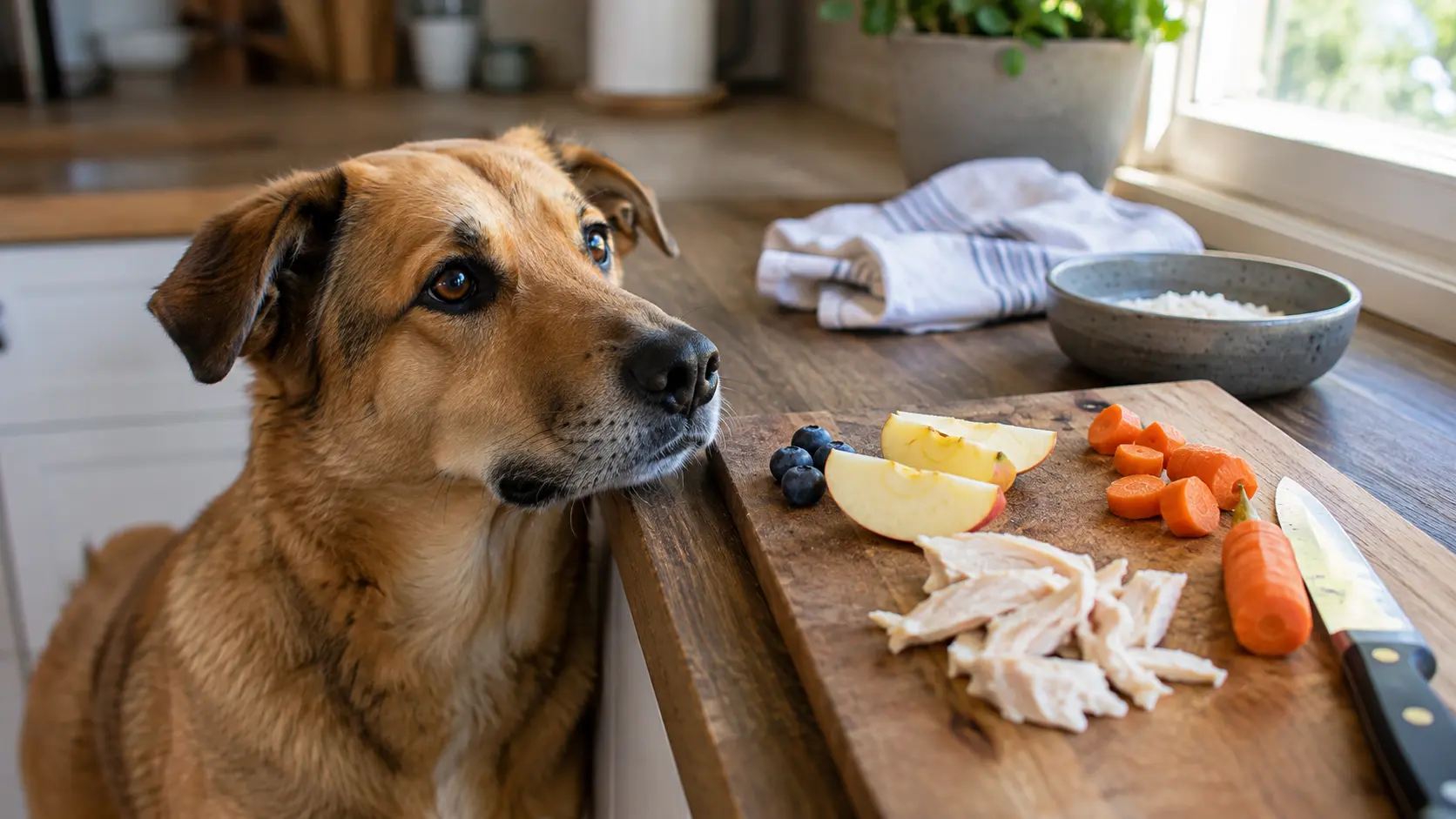
Dogs can eat some ordinary human foods safely, but what matters is more than the ingredient itself. Preparation, portion size, added seasonings, your dog’s health, and whether the food is replacing part of a balanced diet can all change the answer.
If you are looking for the top 10 human foods dogs can eat, good examples include carrots, blueberries, apples, green beans, plain pumpkin, cooked sweet potatoes, plain cooked chicken or turkey, fully cooked eggs, cooked fish, and plain rice.
These foods are best treated as occasional extras rather than replacements for a complete dog food. Other foods—including chocolate, grapes and raisins, xylitol, onions and garlic—can be dangerous and should not be deliberately fed to dogs.
What Human Foods Can Dogs Eat? The Short Answer
For most healthy dogs, these are practical examples of human foods that can be offered in small amounts when prepared appropriately:
Human food |
General guidance |
Important preparation |
|---|---|---|
Carrots |
Generally safe |
Wash and cut to a manageable size |
Blueberries |
Generally safe |
Serve plain and in small amounts |
Apples |
Generally safe |
Remove the core and seeds |
Green beans |
Generally safe |
Plain, without sauces or heavy seasoning |
Pumpkin |
Generally safe |
Use plain pumpkin, not pie filling |
Sweet potatoes |
Generally safe |
Cook thoroughly and serve plain |
Chicken or turkey |
Generally safe |
Fully cooked, boneless and unseasoned |
Eggs |
Generally safe |
Fully cooked and plain |
Fish |
Generally safe |
Cook thoroughly and remove bones |
Rice |
Generally safe |
Cook and serve plain |
This list assumes the food itself is plain and appropriate for the individual dog. A piece of cooked chicken and a piece of chicken covered in garlic sauce are not equivalent.
Human foods should also stay a small part of the overall diet. The World Small Animal Veterinary Association recommends that treats make up no more than about 10% of a dog’s daily calorie intake, with the dog’s normal nutritionally complete food providing the rest.
For a produce-only overview, see our guide to fruits and vegetables dogs can eat.
10 Human Foods Dogs Can Eat
Carrots
Dogs can eat raw or cooked carrots.
They are convenient because they can be cut into small pieces and given without sauces, sugar or seasoning. For a small dog or a dog that tends to swallow food quickly, cut carrots into pieces that are easier to manage rather than handing over a large hard chunk.
Raw carrots are firmer, while cooked carrots may be easier for some dogs to chew. Either way, portion still matters.
Carrots contain useful nutrients, but there is no need to treat them as a supplement or expect them to improve a medical problem. They are simply one reasonable option for an occasional food extra. Veterinary sources also include carrots among human foods that can be shared with dogs in moderation.
Blueberries
A few plain blueberries can be an easy occasional treat.
Blueberries contain fiber and naturally occurring plant compounds, but their nutrient content should not be turned into claims that they prevent disease or noticeably improve a healthy dog’s immune system.
For very small dogs, consider the size of the berry and how your dog eats rather than assuming every dog will chew it properly.
Blueberries can work particularly well when you want something simple that does not contain the salt, fat or seasoning found in many table scraps.
Apples
Dogs can eat apple flesh, but preparation matters.
Remove the core, stem and seeds, then cut the apple into manageable pieces. Giving your dog a plain apple slice is also very different from sharing apple pie, sweetened applesauce or another dessert that may contain a large amount of sugar or other unsuitable ingredients.
Apples work best as a small extra rather than a large serving.
For more detail on apple varieties, seeds, cores, and preparation, see our guide to whether dogs can have apples.
Green Beans
Plain green beans are another generally dog-friendly option.
Fresh, frozen or cooked beans can be suitable if they are served without problematic additions. A few plain beans are very different from green-bean casserole made with butter, salty ingredients, sauces or onion.
Green beans are sometimes promoted as a weight-loss food for dogs. They can be relatively low in calories, but managing an overweight dog’s diet involves total calorie intake, the main food, activity, and the dog’s health—not simply adding one vegetable.
Plain Pumpkin
Plain cooked or canned pumpkin can be given to many dogs in small amounts.
The word plain matters here. Pumpkin pie filling is a different product and may contain sugar and spices that were never intended as dog treats.
Pumpkin contains fiber, which is one reason it often appears in discussions about digestive health. That does not mean every dog with diarrhea or constipation should automatically be treated with pumpkin at home. Persistent digestive problems have many possible causes and deserve veterinary guidance.
For a healthy dog, think of plain pumpkin as an occasional food addition rather than a digestive medicine.
Sweet Potatoes
Dogs can eat cooked sweet potato when it is served plain.
Boiling, steaming or baking it without butter, salt, sauces or heavy seasoning keeps the question simple. Sweet-potato fries, heavily seasoned wedges and sweet-potato casseroles are much less useful choices.
Cut the cooked potato into pieces that match your dog’s size and offer a modest amount.
Sweet potatoes contain several nutrients and fiber, but once again, that does not make them nutritionally necessary for a dog already eating a complete diet.
Plain Cooked Chicken or Turkey
Plain cooked poultry can be a useful occasional extra for dogs that tolerate it.
Remove bones and avoid meat covered in sauces, marinades, garlic, onion or heavy seasoning. Poultry should also be thoroughly cooked rather than being served raw as part of the advice in this guide.
The CDC does not recommend feeding raw pet food because uncooked animal proteins can carry pathogens such as Salmonella and Listeria, which can affect pets and people in the household.
Chicken and turkey are common ingredients in dog food, but that does not mean every dog tolerates them equally. If your dog is on an elimination diet, prescription food or has a known food sensitivity, do not add poultry simply because it is generally considered safe.
Fully Cooked Eggs
Plain, fully cooked eggs can be given to many dogs in moderation.
Boiled egg or egg cooked without a large amount of oil, butter or seasoning keeps things straightforward. A heavily seasoned breakfast plate is another matter.
Eggs contain protein and other nutrients, but they should not replace a nutritionally complete meal.
For intentional feeding, fully cooked egg is the safer choice. If you are considering raw eggs—or your dog already ate one—our raw-egg safety guide explains the risks and what to do next.
Plain Cooked Fish
Plain, thoroughly cooked fish can also be shared in small amounts.
Remove bones carefully before feeding it. Fish bones can create a physical hazard even when the fish itself is suitable.
Skip breaded, fried or heavily seasoned fish. Sauces can add large amounts of fat or salt and may contain onion or garlic.
Fish is often promoted because certain species contain omega-3 fatty acids, but a broad claim that feeding table fish will improve a dog’s skin, joints, coat or immune system would be too strong. The nutritional value depends on the fish, the amount and the dog’s overall diet.
Plain Cooked Rice
Plain white or brown rice is generally safe for dogs when fully cooked.
Keep it free from sauces, butter and seasonings.
Rice sometimes gets described online as though it were automatically a digestive treatment. That is too broad. A dog with vomiting or diarrhea does not necessarily need rice, and repeatedly replacing balanced meals with chicken and rice can create nutritional problems over time.
Cornell University’s College of Veterinary Medicine specifically cautions against relying heavily on the familiar chicken-and-rice combination as though it were a complete long-term diet.
For a healthy dog, a little plain rice is simply another food that can be tolerated—not a required part of the diet.
What About Other Human Foods Dogs Can Eat?
The list does not stop at ten.
Several other foods are generally considered appropriate for healthy dogs in small quantities when they are prepared correctly.
Food |
Main qualification |
|---|---|
Banana |
Small amounts because it adds extra calories and natural sugar |
Watermelon |
Remove rind and seeds |
Cucumber |
Serve plain and cut appropriately |
Remove rind and keep portions modest | |
Plain and in small amounts | |
Plain kernels only; never give the cob | |
Fully cooked, plain and with shell removed | |
Oatmeal |
Cooked plain without sweeteners or flavorings |
Oatmeal |
Veterinary-reviewed guidance also commonly includes fruits such as apples, bananas, blueberries and watermelon; vegetables such as broccoli, carrots and green beans; cooked meat and fish; and plain cooked grains among foods dogs can eat in moderation.
Preparation matters more for some of these foods than a short list can show. Broccoli, corn, shrimp, and cantaloupe each have their own considerations around portions, edible parts, and preparation.
Should Dogs Eat Human Food?
Dogs can eat some human foods. That does not mean human food should become the foundation of their diet.
There is a useful distinction between a food being:
- non-toxic to dogs
- suitable as an occasional extra
- nutritionally complete enough to serve as the main diet
Those are not the same thing.
Human food is not automatically a balanced dog diet
A complete and balanced diet supplies all required nutrients in appropriate proportions for the dog’s life stage.
AAFCO explains that “complete” means the food contains all required nutrients, while “balanced” means those nutrients are present in appropriate ratios. Growth, adult maintenance and reproduction also have different nutritional requirements.
A bowl containing chicken, rice and carrots may contain perfectly edible ingredients without being nutritionally complete as a long-term diet.
If you want to feed a home-prepared diet as your dog’s primary food rather than simply offer occasional extras, that is where guidance from a veterinarian or board-certified veterinary nutritionist becomes much more useful.
Treats and extras should stay limited
WSAVA’s practical recommendation is to keep treats at no more than about 10% of daily calories for an average healthy dog, leaving at least 90% for the main complete diet.
That is more useful than giving one universal number of apple slices or spoonfuls of pumpkin.
A 5-pound dog and a 70-pound dog do not have the same calorie allowance.
How to Give Human Food to Your Dog Safely
A safe ingredient can become a poor choice surprisingly quickly once it turns into a prepared meal.
Check every ingredient
Do not judge a dish by its main ingredient alone.
Plain turkey may be fine. Turkey cooked with onion, garlic and gravy is different.
Plain peanut butter may be suitable in tiny amounts. Peanut butter containing xylitol is not.
For packaged foods, read the ingredient list before sharing.
Keep it plain
When sharing food with your dog, simple preparation is usually easier to assess.
Avoid unnecessary sauces, large amounts of fat, excess salt, added sugar and complex seasoning blends.
That does not mean every spice or tiny trace of salt is automatically poisonous. The point is to avoid turning a straightforward safe food into a mixture containing ingredients your dog does not need—or ingredients that may actually be dangerous.
Remove physical hazards
Check for more than toxicity.
Remove:
- bones
- fruit pits
- apple cores
- corn cobs
- shells where relevant
- pieces that are too large for your dog to manage comfortably
The FDA notes that bones, corn cobs and avocado pits can cause gastrointestinal obstruction even though the problem is physical rather than classic poisoning.
Cook animal foods
For the foods recommended in this guide, serve meat, fish and eggs thoroughly cooked.
Raw animal foods can contain pathogens. Puppies, pets with weakened immune systems and people at higher risk from foodborne illness deserve particular caution around raw diets.
Introduce unfamiliar foods gradually
Start with a small amount rather than a full serving.
Then watch your dog.
Vomiting, diarrhea or other digestive upset means the food may not agree with your dog even if it is generally considered safe.
Itching, swelling, breathing difficulty or a more severe reaction warrants veterinary attention.
Count it as food
A treat does not stop containing calories because it is a carrot, piece of chicken or spoonful of peanut butter.
Human-food extras need to fit into the dog’s overall intake.
What Human Food Can Puppies Eat?
Once a puppy is properly weaned and eating puppy food, some of the same plain foods that are suitable for adult dogs can be given in very small amounts.
Examples include tiny pieces of cooked carrot, plain cooked poultry, apple without the core or seeds, blueberries, fully cooked egg and other simple foods already covered in this guide.
The bigger issue is what those extras replace.
Puppy growth nutrition comes first
Puppies are growing rapidly and require nutrition appropriate for growth rather than simply an assortment of foods that appear healthy.
AAFCO recognizes growth as a distinct nutritional life stage because puppies require different nutrient quantities and ratios from adult dogs.
Human-food extras should therefore remain extras.
If you are still deciding what the puppy should eat as its main diet, see LumaPaw’s guide to choosing a complete puppy food.
Do not use human food to rush weaning
A puppy tasting solid food and a puppy being fully weaned are two different things.
Most puppies begin learning to eat softened puppy food during early weaning rather than jumping directly from milk to adult table food.
LumaPaw’s guide to when puppies are ready for solid food covers that transition in detail.
Very young puppies that are still dependent on their mother’s milk or canine milk replacer should not have their nutritional needs displaced by random human foods.
Portions and food size matter
A piece that is easy for a large adult dog to chew may be inappropriate for a young puppy.
Use small, manageable pieces and avoid bones, pits, cobs and other choking or obstruction hazards.
If a puppy has vomiting, persistent diarrhea, poor appetite, difficulty swallowing, poor growth or another health concern, talk with a veterinarian rather than experimenting with more table foods.
Human Foods Dogs Can Eat Only With Caution
Not every food belongs neatly in a “safe” or “toxic” category.
Some foods are non-toxic but still poor choices in large amounts or for certain dogs.
Cheese and dairy
Some dogs tolerate small amounts of cheese or plain yogurt. Others have trouble digesting lactose and may develop gas, loose stools or other digestive upset.
Milk can cause similar digestive problems in dogs that do not handle lactose well
Cheese can also be calorie-dense and high in fat or sodium.
If your dog does not tolerate dairy well, there is no nutritional reason to insist on feeding it.
Peanut butter
Peanut butter is a good example of why ingredient labels matter.
A small amount of plain peanut butter without xylitol can be acceptable for many healthy dogs, but it is calorie-dense and fatty.
More importantly, some nut butters can contain xylitol, a sweetener also called birch sugar or wood sugar. Xylitol is toxic to dogs and can cause a rapid, dangerous drop in blood sugar as well as liver injury.
Always check the ingredient list.
Bread
A small amount of plain, baked bread is very different from raw yeast dough.
Bread may be non-toxic, but it adds calories without providing a special nutritional advantage to a dog already eating a complete diet.
Raw yeast dough belongs in the dangerous-food category and should not be fed.
Fatty and heavily processed meats
Bacon, sausage, fatty meat scraps and similar foods may not contain a classic dog toxin, but they can contain large amounts of fat and salt.
Rich, fatty foods can cause digestive upset and may be particularly inappropriate for dogs with a history of pancreatitis or dogs on medically controlled diets.
Non-toxic does not automatically mean healthy or useful.
Human Foods Dogs Should Not Eat
Some foods should not be deliberately shared with dogs.
Chocolate, cocoa, coffee and caffeine
Chocolate contains methylxanthines, primarily theobromine and caffeine. Dogs process these compounds differently from people, and excessive exposure can cause vomiting, agitation, abnormal heart rhythms, tremors, seizures and other serious effects. The concentration varies substantially between chocolate products, with cocoa powder and darker chocolates generally containing much more than white chocolate.
If your dog has already eaten chocolate, our chocolate exposure guide explains what to do next.
Coffee, caffeine-containing drinks and cocoa products should also be kept away from dogs.
Grapes and raisins
Do not rely on a supposed “safe number” of grapes.
Grapes and raisins have been associated with acute kidney injury in dogs, and individual susceptibility varies. The amount of tartaric acid can also differ between fruit, making the risk difficult for an owner to predict reliably at home.
If your dog eats grapes or raisins, contact a veterinarian or animal poison service for case-specific advice rather than waiting to see whether symptoms appear.
Onion, garlic, chives and leeks
Onions, garlic, chives and leeks belong to the Allium group.
Dogs can develop oxidative damage to red blood cells after significant exposure, potentially leading to hemolytic anemia. The risk is not limited to raw onion or garlic: cooked, dried, powdered and concentrated forms can also cause problems.
That is why sauces, soup mixes, seasoning powders and prepared leftovers deserve attention even when the main food appears dog-safe.
Xylitol or birch sugar
Xylitol should be treated as an urgent dog-safety issue.
It may appear in sugar-free gum and candy, baked goods, medicines, supplements, dental products and some nut butters.
In dogs, xylitol can trigger a rapid release of insulin and a dangerous fall in blood glucose. Severe exposures may also cause liver failure.
If you suspect xylitol ingestion, contact a veterinarian, emergency clinic or animal poison service promptly.
Macadamia nuts
Macadamia nuts can cause illness in dogs.
Reported signs include vomiting, weakness, lack of coordination, tremors and fever. Most dogs recover with appropriate care, but macadamias do not offer a reason to take the risk.
Alcohol and raw yeast dough
Dogs should not consume alcoholic drinks or foods containing enough alcohol to cause exposure.
Raw yeast dough is also dangerous. It can continue expanding in the stomach, while fermentation can produce ethanol.
Keep rising bread dough and alcoholic foods or drinks out of reach.
Bones, cobs and other physical hazards
Not every dangerous table-food exposure is poisoning.
Bones can cause dental injuries, choking, gastrointestinal trauma or obstruction. WSAVA advises against both cooked and raw bones as treats because of these risks.
Corn cobs, large fruit pits and similar items can also obstruct the digestive tract.
A safe ingredient attached to a dangerous object is still a dangerous meal.
What Should You Do If Your Dog Eats a Dangerous Food?
Do not spend valuable time searching for a universal toxic dose while your dog is sitting beside you.
Take a few practical steps instead.
Identify exactly what was eaten
If possible, collect:
- the food or product name
- the ingredient label
- the approximate amount missing
- when the exposure happened
- your dog's approximate weight
Keep the packaging available.
Contact a veterinarian or animal poison service
Known toxins such as xylitol, grapes, raisins or significant chocolate exposures warrant professional assessment.
The dog’s size, amount eaten, exact product, time since ingestion and health history can all affect the recommendation.
Do not improvise a home treatment
Do not induce vomiting or give medication unless a veterinary professional specifically tells you to do so for your dog’s situation.
A treatment that is useful for one exposure can be ineffective or unsafe for another.
Do not rely on the absence of symptoms
Some toxic effects are delayed.
Allium-related red-blood-cell damage, for example, may not produce obvious signs immediately, while grape or raisin exposure can progress to kidney injury.
If the food is known to be dangerous, get advice based on the exposure rather than waiting for your dog to look ill.
When Safe Human Foods May Still Be a Bad Choice
A general safe-food list cannot account for every individual dog.
Dogs with medical conditions
Ask your veterinarian before adding extras if your dog:
- has diabetes
- has pancreatitis or a history of pancreatitis
- has kidney disease
- has chronic gastrointestinal problems
- has known or suspected food allergies
- is overweight and on a calorie-controlled plan
- eats a veterinary prescription diet
A food does not become universally suitable just because it is harmless to most healthy dogs.
WSAVA specifically notes that conventional treats may not be appropriate for dogs with medical conditions, dietary sensitivities or veterinary-prescribed diets.
Individual tolerance varies
One dog may eat a little plain yogurt without difficulty while another develops diarrhea.
The same applies to new fruits, vegetables and proteins.
Introduce unfamiliar foods conservatively and stop feeding something that repeatedly causes digestive problems.
Safe does not mean beneficial
This distinction is easy to miss.
Blueberries contain antioxidants. Carrots contain vitamins and fiber. Fish can contain omega-3 fats.
Those facts describe the food. They do not prove that adding a small serving to an already complete diet will prevent disease, extend life or correct a medical condition.
LumaPaw’s approach is simpler: choose extras because they are safe, practical and appropriate for your dog—not because a list online called them “superfoods.”
Common Mistakes When Sharing Human Food With Dogs
Most mistakes do not happen because an owner intentionally gives a dog something dangerous. They happen when the details are overlooked.
Common examples include:
- assuming something healthy for people must be healthy for dogs
- checking the main ingredient but ignoring sauces and seasoning
- forgetting to read packaged-food labels
- giving large portions because a food is described as healthy
- leaving bones in otherwise safe meat
- allowing treats and table food to displace a balanced diet
- giving a puppy adult-sized pieces
- assuming a dog is safe because no symptoms appeared immediately
- trying an internet home remedy after a possible poisoning
A useful habit is to judge the whole food as served, not just the ingredient name.
Frequently Asked Questions
Can dogs eat human food every day?
A dog can receive small amounts of appropriate human food regularly if those extras fit into the dog’s overall calorie allowance and do not unbalance the main diet.
That is different from feeding leftovers as the dog’s main food every day.
For most healthy dogs, WSAVA recommends keeping treats to no more than about 10% of daily calories.
What human foods are safest for puppies?
For fully weaned puppies, small pieces of simple foods such as cooked carrots, plain cooked poultry, blueberries, apple without the core and seeds, or fully cooked egg can be reasonable extras.
The puppy’s main food should still provide complete and balanced nutrition for growth.
Very young puppies that are still being weaned need a different feeding approach. See LumaPaw’s guide to when puppies can start eating solid food for that stage.
How much human food can a dog have?
There is no useful universal number of apple slices, chicken pieces or spoonfuls that fits every dog.
A practical upper guideline is to keep treats and extras to about 10% or less of daily calories, but even that should be adjusted when a veterinarian has prescribed a specific diet or calorie target.
Can dogs eat leftovers from dinner?
Sometimes, but the ingredients matter more than the word “leftovers.”
A piece of plain cooked turkey may be appropriate. Turkey covered in onion gravy, fatty skin and heavy seasoning is not the same food from a dog’s perspective.
Before sharing leftovers, check every ingredient and remove bones or other physical hazards.
What if I am not sure whether a food is safe?
Check the food before offering it rather than experimenting.
For ordinary feeding questions, your veterinarian or a reliable veterinary nutrition source can help.
If your dog has already eaten something that may be toxic, contact a veterinarian, emergency animal clinic or animal poison service and provide the product, amount and timing if you know them.
Safe Human Food Is Still Extra Food
The top 10 human foods dogs can eat are not special ingredients every dog needs. They are simply examples of foods that can be shared sensibly when prepared correctly and offered in appropriate amounts.
The safest approach is to keep the main diet nutritionally complete, use human foods as modest extras, and look beyond the ingredient name. Check the preparation, portion, hidden ingredients and physical hazards before handing anything over.
And when the question involves a known toxin, a medical condition or a puppy with feeding problems, veterinary guidance matters more than experimenting with whatever happens to be in the kitchen.